
Osteoporosis after 65: what does research really say about physical activity?
When it comes to osteoporosis, the recommendation to “stay physically active” is now widely recognised. Fragility fractures of the hip, spine and wrist are among the leading causes of loss of independence in people over 65. But what scientific evidence supports the effectiveness of physical activity in preventing osteoporosis and its consequences?
A systematic review published in the International Journal of Behavioral Nutrition and Physical Activity sought to answer this question. The review was conducted to inform the World Health Organization (WHO) guidelines on physical activity and sedentary behaviour in adults aged 65 and over.
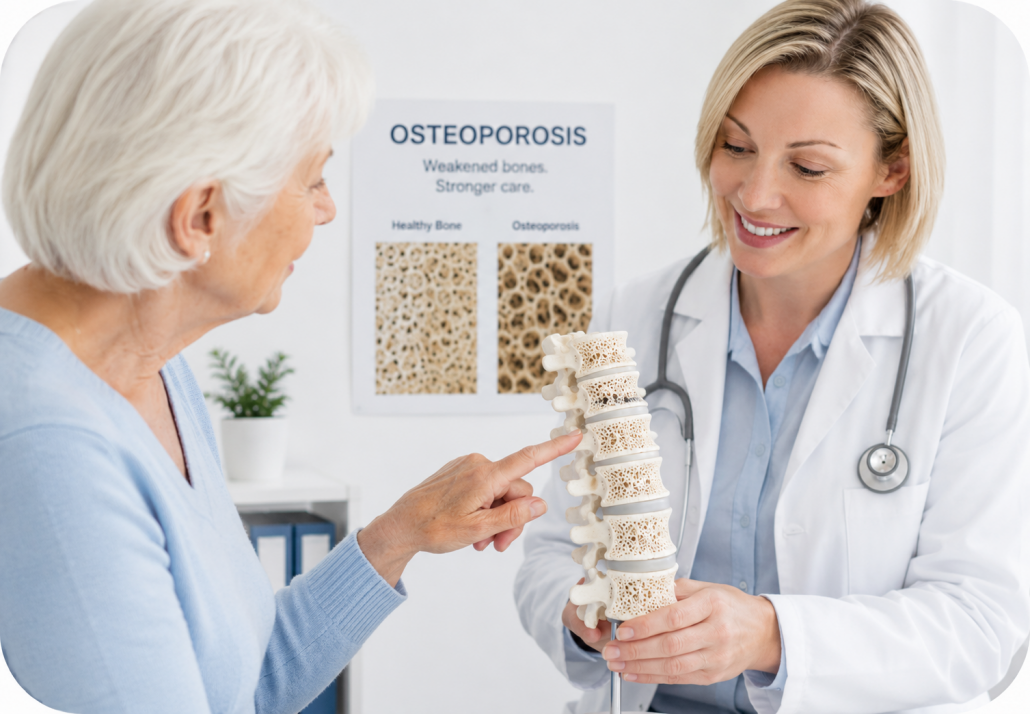
What is osteoporosis?
Osteoporosis is a systemic skeletal disease characterised by a reduction in bone density and quality, making bones more fragile and susceptible to fractures.
“During childhood and adolescence, the body gradually builds up its bone mass, reaching peak bone mass at around the age of 30” – explains Dr Maria Chiara Reitano, a specialist in Physical and Rehabilitation Medicine at ISICO. “After this point, bone resorption gradually begins to prevail, and as we age, this process can contribute to the development of osteoporosis. Because osteoporosis is often referred to as a ‘silent disease’, it is frequently diagnosed only after a fracture has occurred, although tests such as dual-energy X-ray absorptiometry (DXA) can detect it at an earlier stage”.
As we age, bone loss results from the interaction of physiological changes, reduced muscle strength, lower levels of physical activity and other risk factors, including chronic diseases, certain medications and an increased risk of falling. “This is why prevention should combine any necessary pharmacological treatments with an active lifestyle, in which physical activity plays a key role” – Reitano emphasises.
What does scientific research show?
The systematic review examined the available studies to assess the effects of physical exercise on bone health in older adults. Its findings confirm that physical activity plays a fundamental role in counteracting the effects of ageing on the musculoskeletal system and helping to reduce the risk of fragility fractures.
Physical activity has a dual benefit. On the one hand, it helps preserve bone mineral density, with particularly consistent results in the lumbar spine. On the other, it improves muscle strength, balance, coordination and mobility, reducing the risk of falls, one of the leading causes of fractures in older people. Another important finding concerns the type of exercise performed.
“The programmes that have shown the best results are progressive and individually tailored, combining aerobic activity, resistance training and specific exercises to improve balance and movement control” – explains Reitano. “There is no single ‘miracle exercise’: the greatest benefits come from combining different types of exercise, adapted to each person’s individual needs and abilities”.
Walking regularly is an important habit, but it may not be enough on its own. To maintain strong and healthy bones, it is essential to combine walking with muscle-strengthening exercises and activities specifically designed to improve balance and coordination. This approach not only supports bone health but also helps preserve independence in everyday activities. Every exercise programme should be tailored to the individual’s clinical condition, age, fitness level and any coexisting medical conditions. For this reason, it is advisable to seek guidance from qualified professionals, such as physiotherapists, medical specialists or exercise science professionals, who can identify the most appropriate exercises and ensure that activity progresses safely.
“It is important to remember that physical exercise is one of the cornerstones of prevention, but it does not replace pharmacological treatment when this is indicated” – concludes Dr Reitano. “For people already diagnosed with osteoporosis or with significantly reduced bone mineral density, treatment must be determined by a physician and may involve a combination of medication, physical activity, appropriate nutrition and measures to reduce the risk of falls.”
The available evidence therefore reinforces a simple but essential message: it is never too late to start being physically active. Regular, well-structured physical activity tailored to individual abilities is one of the most effective ways to protect bone health, maintain independence and improve quality of life, even after the age of 65.





Leave a Reply
Want to join the discussion?Feel free to contribute!