Is a Heavy School Backpack Really Bad for Your Back?

At the start of every school year, the weight of school backpacks becomes a concern for many parents. Can a heavy backpack damage the back, alter posture or contribute to spinal problems?

A recent study published in the European Spine Journal examined 65 healthy schoolchildren under different loading conditions: without a backpack, with a load of 10–15% of body weight, and with a heavier load averaging about 19%. Researchers assessed changes in spinal and pelvic alignment while the children were standing. 

The body adapts to the load

As backpack weight increased, children tended to lean further forward and showed a small increase in thoracic kyphosis. However, these changes were temporary responses to carrying the load rather than evidence of permanent postural alterations. 

The study identified around 16% of body weight as the value that best distinguished children who developed a significant forward trunk imbalance while carrying the backpack. This should not be considered a strict universal threshold, but rather a practical reference. 

Physical fitness also matters

An interesting finding was that children with greater grip strength showed less forward imbalance under load, suggesting that the ability to manage a backpack depends not only on how much it weighs, but also on the child’s physical capacity. 

The practical message is therefore twofold: avoid unnecessarily heavy backpacks, using 15–16% of body weight as a reasonable reference, but also encourage children to stay active and physically fit. And importantly, school backpacks do not cause scoliosis.

ISICO ranks first for scientific publications in a new international analysis of scoliosis rehabilitation research

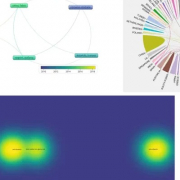
A new bibliometric study published in 2026 (Scientific literature landscape analysis of researches on rehabilitation in scoliosis over the last 30 years)  has mapped international research on scoliosis rehabilitation over the past three decades, identifying ISICO – the Italian Scientific Spine Institute – as the institution with the highest number of publications in the dataset analysed.

Published in Spine Research, the study included 308 articles and reviews and involved 540 institutions and 1,392 authors.
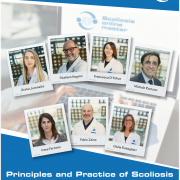
ISICO ranked first among institutions for publication output, while Stefano Negrini, ISICO Scientific Director, ranked first among authors for number of publications and was also the most co-cited author. Fabio Zaina, ISICO specialist in Physical and Rehabilitation Medicine,  and Michele Romano, Physiotherapy Director of Isico, ranked second and third respectively for publication output. 

Not an isolated finding

The new study is particularly interesting when considered alongside three other independent bibliometric analyses published in recent years, each exploring a different area of scoliosis research.

A 2024 analysis of exercise therapy for adolescent idiopathic scoliosis found ISICO tied for first place among institutions for number of publications and first for total citations within the dataset analysed. Five ISICO researchers appeared among the ten most prolific authors: Stefano Negrini, Michele Romano, Fabio Zaina, Alessandra Negrini and Sabrina Donzelli. 

Another 2024 study, focusing on orthotic treatment and bracing for adolescent idiopathic scoliosis, highlighted the contribution of individual ISICO researchers. Stefano Negrini ranked second and Fabio Zaina third among the most prolific authors in the dataset, while Negrini was also the third most co-cited author. 

Finally, a 2025 bibliometric analysis examining adolescent idiopathic scoliosis treatment as a whole, including both conservative and surgical approaches, found that the 2016 SOSORT Guidelines: orthopaedic and rehabilitation treatment of idiopathic scoliosis during growth, with Stefano Negrini as first author, were the most co-cited paper in the dataset. The previous 2011 SOSORT Guidelines also appeared among the ten most co-cited publications. 

Four different analyses, a converging picture

Bibliometric studies do not establish which institution provides the best clinical care. They measure specific aspects of scientific activity — such as publication output, citations and the influence of individual papers — within a defined research field and dataset.

The value of a single ranking is always relative, because every bibliometric study is based on a specific dataset, time period and research question. What is more interesting here is the convergence of four independent analyses, focused on different areas of scoliosis research, which repeatedly identify ISICO, its researchers or their scientific work among the most productive, cited or influential contributors.
“This is especially meaningful for us because research has always been an integral part of our clinical work: it allows us to test our approaches, contribute to international knowledge and continuously improve patient care. However, the fact that four independent analyses, covering different areas of scoliosis research, repeatedly identify ISICO, its researchers or their scientific contributions among the most productive, cited or influential provides a converging and independently verifiable picture of ISICO’s contribution to international scoliosis research – ends Negrini”.
This is particularly noteworthy considering that several of these analyses cover research periods beginning before ISICO was founded in 2003.

Bibliografia

Stefano Negrini at the forefront of global rehabilitation research

Stefano Negrini, Scientific Director of ISICO, has been named joint winner, together with Christopher Maher (Australia), of the fourth edition of the four-yearly King Salman International Award for Disability Research, in the Rehabilitation and Social Sciences category.

It is perhaps the most prestigious international award dedicated to research in the fields of disability and rehabilitation. This year, it received more than 770 nominations from 111 countries, involving professionals from across the entire rehabilitation and disability field. Following a six-month evaluation process, the ten best candidates in each category were initially selected, followed by three finalists and, ultimately, the winners.

The award recognises the value and impact of a scientific career built through years of research, international collaboration, and commitment to advancing evidence-based rehabilitation, from spinal disorders and scoliosis to rehabilitation research and global health.

Full Professor of Physical and Rehabilitation Medicine at the University of Milan, Stefano Negrini is the founder and former director of CochraneRehab, and has worked extensively with the World Health Organization to bring together the best available scientific evidence to support global health decision-making in rehabilitation. He also founded and has held leading roles within SOSORT, the international Society on Scoliosis Orthopaedic and Rehabilitation Treatment, contributing to the development and worldwide dissemination of rehabilitation research.

His scientific and professional activity has also developed through long-standing collaborations with major international rehabilitation and spine societies, including ISPRM, ESPRM, ISSLS, EUROSPINE and the Scoliosis Research Society, further strengthening the international reach of his work.

For several years, he has also been included in the Stanford/Elsevier ranking of the world’s top 2% most-cited scientists across all scientific disciplines, further reflecting the international impact of his research.

“One of the most important awards in the field of rehabilitation”: this is how Stefano described the recognition. A definition that conveys the significance of an award that celebrates not a single study, but the contribution and global impact of an entire scientific career.

“This recognition is the result of a long journey, one that I have never travelled alone. I am deeply grateful to ISICO and to all my colleagues and collaborators who, over the years, have contributed to my personal, professional and scientific growth. Above all, I thank my patients, who remain my greatest teachers. It is also thanks to this collective effort that I have been able to reach such an important milestone today.”

A scoliosis camp in Beijing: an unexpected experience

Our Physiotherapy Director, Michele Romano, was in China to teach a SEAS (Scientific Exercises Approach to Scoliosis) course for physiotherapists. While in Beijing, he was also scheduled to provide training on scoliosis treatment at Beijing Children’s Hospital. But when he arrived, he discovered that something completely different had been organized. This is his account of those four unexpected and intense days.

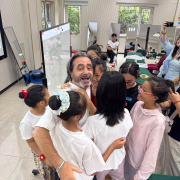
“I was in Beijing around Mid-August to provide training for physiotherapists on scoliosis treatment at Beijing Children’s Hospital. But on the first day, I realized that something completely different had been organized. I walked into the room where I was supposed to meet a small group of physiotherapists and instead found an auditorium packed with around 90 people. Adults and children.

After my initial surprise, I asked what was going on and they told me that a ‘Camp’ had been organized: an event to teach scoliosis-specific exercises to young patients, with their families actively involved as well.

I thought about it for a minute and then I got started.

First, a plenary introduction for the whole audience, with general information about scoliosis. Then I started assessing the patients. There were 26 of them.

With the help of four physiotherapists with little experience, whom I trained on the spot, we began measuring all the patients and collecting the information we needed to decide how to treat them. The physiotherapists assessed the patients and then brought me a form with the data they had collected. I checked the information and then decided how to treat each patient’s curve.

The following day, we started treatment. Twenty-six individual stations where I taught the basics of treatment and then entrusted each patient to one of the supporting physiotherapists. An incredibly exhausting day. The next day, we checked what they had learned and taught them the exercises. We ended the day with a Q&A session with everyone.

We closed the Camp on the fourth day with a final discussion with the parents, certificates for the young participants and a very moving final hug!”.

Training and Research: International Exchange in the First Half of 2026

566 professionals trained, 30 SEAS courses and more than 25 countries involved. These are some of the figures from the first seven months of 2026, during which ISICO’s international activities brought together training, research and scientific exchange.

From the Philippines to Indonesia and Japan, from China to Kazakhstan, from France to the United States, and as far as Brazil and Argentina, between January and July we organised 23 SEAS Level 1 and 7 Level 2 courses, involving 439 and 127 professionals respectively. In addition, 32 participants attended our online Master’s programme, alongside the professionals reached through webinars and other educational activities.

“These figures are particularly meaningful because of what lies behind them,” comments Stefano Negrini, ISICO Scientific Director. “Training brings us into contact with professionals working in very different healthcare and cultural settings. We share what we have learned from research and clinical experience, while the questions and experiences that emerge during our courses provide new insights and stimuli for our own work.”

The same exchange continues within the international scientific community. ISICO specialists have taken part in numerous congresses and scientific meetings, from ESPRM in Krakow to the EARM Meeting in Lyon, from ISSLS in Cape Town to IRSSD in Novi Sad, as well as the PREPARE Annual Meeting and the Brazilian Congress on Scoliosis.

One particularly significant event was SOSORT 2026 in Turin, where ISICO presented 23 scientific contributions – 19 oral presentations and 4 posters – and Francesco Negrini received the SOSORT Award.

“Training, research and clinical practice are not separate worlds,” concludes Negrini. “New evidence needs to find its way into everyday clinical practice, but it is equally important that the challenges we encounter with our patients generate new research questions. Exchange with colleagues from other countries is essential: it pushes us to test what we do, compare it with different experiences and, when necessary, change our approach.”

After the summer break, courses and scientific events will resume, with a new international programme already scheduled for the second half of the year.

Friendship and Scoliosis: the bonds that last

There is a kind of friendship that begins in the most unexpected moments. Not during carefree afternoons or between school desks, but in those times when life asks you to grow up a little sooner than you expected. That is how they met: at a summer camp for teenagers with scoliosis. Not the typical camp filled only with games and laughter, but a place where every backpack carried something more. A brace. A struggle. A quiet fear.

At first, there were only shy glances and hesitant smiles. Then came whispered conversations in the evening, jokes to lighten the mood, and small gestures of encouragement when wearing that brace for just one more day felt almost impossible. And without even realizing it, a true friendship was born. The kind that needs no explanations.

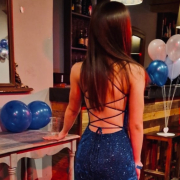
The years passed. The brace came off, life moved on, and their backs changed. But some things are never left behind. They simply transform. And then comes a special evening: Anna’s eighteenth birthday.

Anna walks into the room wearing an elegant, light, beautiful dress. A dress that reveals her back. The very same back that, just a few years earlier, had been enclosed in a rigid shell of plastic and perseverance. But those who are there with her do not see only the dress. They see the journey. They remember the tears held back, the laughter they shared, the difficult days and the ones when it felt as though they could fly.

They look at each other and understand, without needing to say a word:

“We made it.”

And above all:

“We’re still here.”

This is for all of you—boys and girls who are facing scoliosis and wearing a brace today. I know it isn’t easy. There will be days when it feels unfair, heavy, endless. But please remember this: you are not alone.And what you are living through now, even if it feels like nothing more than a burden, can become something incredibly precious.

Because somewhere between an adjustment and a moment of discomfort, between a restless night and a difficult day, you may find people who truly understand you.

And perhaps, a few years from now, you too will find yourselves together again—laughing, celebrating, looking back with pride.

With a different back, yes. But above all, with bonds that were never broken.

Back pain and menopause: why posture changes after 50 and how to protect your spine

We often tend to think of scoliosis as a condition linked exclusively to adolescence, those growing years when parents constantly reminded us to “stand up straight”. However, there is a lesser-known yet very common reality: scoliosis that appears or worsens in adulthood, often during a delicate stage such as menopause. If, after the age of 50, you have started to notice persistent lower back pain or changes in your posture, you are not alone. Understanding what happens to our spine is the first step towards continuing to move freely and confidently.

“De novo” scoliosis: a new challenge after 50

There are two ways scoliosis may present in adults. Some people have lived with a spinal curve since their youth, which may become symptomatic again over time.
For many others, however, what doctors call “de novo” scoliosis develops. As the name suggests, this is a completely new curvature that appears in people who previously had a well-aligned spine. It is not caused by abnormal bone growth, but by the natural wear and tear of the structures that support the back. In most cases, this form affects the lower back (lumbar or thoracolumbar region) and presents with gradual postural changes associated with pain.

At the root of the condition are asymmetrical degenerative changes: the intervertebral discs thin unevenly, the joints between the vertebrae lose stability, and muscles and ligaments become less efficient. This creates an “asymmetrical load”: the spine tilts, weight distribution becomes uneven, and a vicious cycle begins, accelerating degeneration and progression of the curve. Over time, these changes may also lead to a reduction in the normal lumbar curvature (lordosis) and, in some cases, to small vertebral slippages or narrowing of the spinal canal.

Why women in particular? The role of menopause

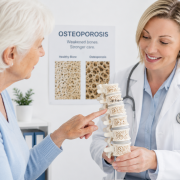
Statistics speak clearly: adult scoliosis affects women more frequently and increases with age. It is estimated that prevalence rises from around 13% in people under 60 to over 30% after the age of 60, with even higher rates among older populations. With the onset of menopause, the body undergoes a true hormonal revolution that affects bone mineral density (osteoporosis), ligament elasticity, and muscle tissue quality. But it is not only a matter of more fragile bones.
The higher prevalence in women appears to result from a complex combination of factors: disc degeneration, osteoarthritis, ligament laxity, and muscular changes, which together make the spine more vulnerable to these small structural “failures”.

What can you do today for your back?

The good news is that we are not passive spectators when it comes to the health of our spine.

Stay active

Exercise is your greatest ally. Intense activity is not necessary: the important thing is to counteract sedentary habits and loss of muscle mass (sarcopenia). Strong muscles support the spine like a true “natural corset”.

Self-correction exercises

If scoliosis causes asymmetries or pain, modern physiotherapy offers very effective tools. Specific exercises teach the body to regain balance and improve posture actively. In particular, SEAS self-correction exercises have been shown to be effective in improving or slowing the progression of adult scoliosis.

Listen to your body’s signals

Do not ignore persistent pain, tingling in the legs, or difficulty walking for long periods. In more advanced cases, symptoms related to nerve involvement may appear, such as radiating pain (radiculopathy) or reduced walking tolerance (claudication). In these situations, it is important to consult a specialist. By carrying out daily home exercises aimed at improving trunk support, it is possible to reduce the impact of spinal degeneration on both pain and quality of life.

International guests at the ISICO clinic in Vigevano

The ISICO clinic in Vigevano recently welcomed two international guests from New York: physiotherapists Prachi Bakarania and Gail Fennell, both certified in SEAS Level 1 and Level 2.

The visit was coordinated by ISICO physiotherapist Alessandra Negrini, who guided the two colleagues through the clinical activities carried out at the centre. Prachi Bakarania is also Secretary of SOSORT and a member of the Society’s board.

We asked both guests a few questions about their experience with SEAS and their visit to ISICO.

Scoliosis: how is it treated in your country?

Gail Fennell: “Our treatment is similar to yours. Patients often seek us out directly. We do receive referrals from MDs, but very often it is the family who finds us for care. Our evaluation process is also quite similar. I really appreciated the app you use to guide patients with their home exercises. We use videos on patients’ phones and printed instructions, but your system seems even easier for patients to follow”.

Prachi Bakarania: “Similarly to your system, patients are diagnosed with scoliosis by an MD or RN and then referred for bracing. Physiotherapy specifically dedicated to scoliosis is still developing, and often patients have to advocate for themselves in order to access a scoliosis physiotherapist”.

Are you satisfied with what you learnt during the SEAS courses? What impact has this training had on your daily clinical practice?

Gail Fennell: “Yes, absolutely. I use what I learned in the SEAS courses every day in my clinic. I especially appreciate the balance and coordination exercises aimed at neurological integration.

Prachi Bakarania: “Very satisfied. I loved SEAS — it truly changed the way I treat patients. I integrated what I learned in SEAS with my previous education and clinical experiences, and I feel it has made me a stronger physiotherapist.”

What was your experience visiting the ISICO clinic in Vigevano?

Gail Fennell: “It was a wonderful opportunity to observe Alessandra’s expertise in evaluating patients and prescribing exercises directly in her clinic. The visit was both a confirmation and a reminder of the principles of SEAS treatment and how they can be adapted to each individual patient. She demonstrated how important it is to understand not only the patient physically and emotionally, but also the entire family context when planning home exercises and brace treatment”.

Prachi Bakarania: “Watching Alessandra do what she does best was incredible. Her ease with patients and her ability to understand not only the patient, but also the family, was amazing. It was also very interesting to see how many similarities there are with my own clinical practice, while at the same time learning new ideas that I cannot wait to apply in my clinic. The trip was absolutely worth it”.

SOSORT 2026 kicks off: ISICO contributes 23 studies and shares new research highlights

The international SOSORT 2026 Congress opened on April 29 in Turin, Italy, and will run until May 2, bringing together experts from around the world in the field of conservative treatment of scoliosis and spinal deformities.

ISICO is contributing with a significant scientific output: 23 studies delivered as oral presentations and posters, confirming its ongoing commitment to research and clinical innovation. After presenting in our previous issue the two studies selected for the SOSORT Award, we are continuing here with four additional studies, most of which will be delivered as oral presentations.

Exercise adherence: understanding motivation to personalise care

A Rasch-Validated Questionnaire for Evaluating Adherence Predisposition to Scoliosis Specific Exercises in Adolescents with Idiopathic Scoliosis: Preliminary Results 
Vanossi M., Ferrario I., Leonelli B., Negrini S., Negrini A.

This study, presented as an oral presentation, introduces a Rasch-validated questionnaire designed to assess adolescents’ predisposition to adhere to scoliosis-specific exercises.

Findings show that adherence is multidimensional, driven by:

  • intrinsic motivation,
  • extrinsic motivation.

These components interact and influence patient behaviour differently, providing a foundation for more personalised and effective treatment strategies.

Video comment by Irene Ferrario

Brace quality: a checklist to standardise the brace check process 

The “Brace-Check List”: A New Tool for Scoliosis Brace Quality Control 
Febbo F., Zaina F., Lusini M., Zonta A., Ferrario I., Negrini S., ISICO physicians and I-SHAPE team

This study (an oral presentation at the conference) presents a structured checklist, developed through a consensus process, to improve the quality of brace evaluation.

It addresses four key domains:

  • brace fitting,
  • tolerability,
  • three-dimensional balance,
  • corrective effectiveness.

The goal is to make the brace check more systematic and reliable, ultimately improving both treatment outcomes and adherence.

Video comment by Francesca Febbo

Brace adherence: perspectives from patients, families, and professionals

Bracing for Success: Comparison of Patient, Family, and Professional Perspectives on Barriers and Facilitators from 3414 Messages in a Scoliosis Blog (poster)
Rebagliati G., Negrini A., Colombo M., Negrini F., Ferrario I., Negrini A., Zaina F., Negrini S.

Presented as a poster, this study analyses over 3,400 contributions to identify barriers and facilitators to brace adherence.

Key differences emerge across groups:

  • patients mainly report emotional impact and physical discomfort,
  • parents highlight informational needs,
  • professionals focus more on clinical aspects.

Facilitators include clinical support, effective communication, and perceived treatment results, highlighting the importance of a comprehensive, multidisciplinary approach.

Video comment by Giulia Rebagliati

Exercises and gender: minimal differences, beyond stereotypes

Gender differences in self-reported adherence to scoliosis-specific exercises: a cross-sectional study of 2,214 patients with adolescent idiopathic scoliosis
Romano M.

This study, presented as an oral presentation, investigates gender differences in exercise adherence in over 2,200 adolescents.

Males reported slightly higher exercise time than females; however, the difference is:

  • statistically significant,
  • but clinically negligible.

These findings challenge common assumptions and support the need for individualised approaches rather than gender-based expectations.

Video comment by Michele Romano

Ongoing updates

In the next updates, we will share more studies, along with insights and reflections emerging from the congress. The results of the SOSORT Award winners are also expected in the coming days.

Bending, lifting, sitting: what you should really know about back pain

A large study published in JAMA Network Open and conducted on people who had recently consulted a doctor for low back pain sought to answer two fundamental questions: which everyday activities can trigger an immediate worsening of pain (the so-called “flare”), and whether practising these activities more frequently is associated with long-term functional problems.
The researchers followed 416 adults for one year, repeatedly asking them (often three times a week in the early phases) how many hours they had spent in the previous 24 hours lifting, bending, sitting, walking and performing other activities, and whether they were experiencing a worsening of pain at that time.

The results are interesting and, in many ways, reassuring. In the short term, some activities were indeed associated with a higher likelihood of increased pain: lifting loads (even if not particularly heavy), pushing or pulling, bending, twisting and squatting.
Each additional hour spent performing these movements slightly increased the probability of a flare in the following 24 hours. Conversely, spending more hours sitting was associated with a lower likelihood of immediate worsening.

And in the long term? Here comes the good news: the average amount of time spent on these activities during the first eight weeks was not associated with greater functional limitations after one year. In other words, even if a movement may make us feel worse in the following hours, there is no evidence that those who perform these activities more frequently develop worse back function at 12 months.

What does all this mean for people with low back pain?

“First of all, there is no need to automatically give up demanding everyday actions – such as lifting a child or bending down to pick something up – for fear that they may cause permanent damage,” explains physiotherapist Martina Poggio. “It is normal for certain actions to trigger temporary discomfort: this study suggests that, in most cases, these episodes do not translate into a lasting worsening of function. We can therefore choose to do what matters in our lives, while taking into account the possibility of increased pain and adopting simple management strategies: slowing the pace, taking breaks, using symptomatic remedies recommended by a doctor or conservative treatments, and consulting a professional if low back pain is very frequent or disabling.”

Is sitting, then, a good strategy? Not necessarily. While it may reduce the risk of pain in the short term, a sedentary lifestyle is not a healthy long-term choice: it increases the risk of cardiovascular disease and other chronic conditions. Decisions should therefore be balanced, taking into account both back pain and overall health.

There are, therefore, movements that may trigger temporary discomfort, but there is no evidence that these episodes lead to functional deterioration after one year.
“This is why, in the relationship with the patient, absolute prohibitions should not be imposed,” observes Dr Fabio Zaina, ISICO physiatrist. “The goal is to arrive at informed, shared and balanced choices.”

It may sound like a good theory, but difficult to apply in practice. When acute episodes recur, fear, intense pain, limited movement and, at times, the inability to continue working and carrying out daily activities leave their mark, and each episode may appear more severe and longer-lasting than the previous one.
“This is precisely why at ISICO we propose a multidisciplinary and personalised approach,” concludes Poggio. “The specialist doctor ensures that there are no conditions requiring further diagnostic investigation or targeted treatments; the physiotherapist intervenes with manual therapy when indicated, with personalised exercises and, above all, supports the patient towards the fullest possible return to their activities.”

The ultimate goal is to enable people to live their lives with common sense, minimise temporary relapses and reduce the risk of chronicity through a safe, informed and shared pathway.

Biblioography

Suri P, Timmons AKI, Korpak AM, et al. Transient and Long-Term Risks of Common Physical Activities in People With Low Back Pain. JAMA Netw Open. 2025;8(12):e2547915. doi:10.1001/jamanetworkopen.2025.47915