
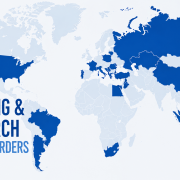
Training and Research: International Exchange in the First Half of 2026
566 professionals trained, 30 SEAS courses and more than 25 countries involved. These are some of the figures from the first seven months of 2026, during which ISICO’s international activities brought together training, research and scientific exchange.
From the Philippines to Indonesia and Japan, from China to Kazakhstan, from France to the United States, and as far as Brazil and Argentina, between January and July we organised 23 SEAS Level 1 and 7 Level 2 courses, involving 439 and 127 professionals respectively. In addition, 32 participants attended our online Master’s programme, alongside the professionals reached through webinars and other educational activities.
“These figures are particularly meaningful because of what lies behind them,” comments Stefano Negrini, ISICO Scientific Director. “Training brings us into contact with professionals working in very different healthcare and cultural settings. We share what we have learned from research and clinical experience, while the questions and experiences that emerge during our courses provide new insights and stimuli for our own work.”
The same exchange continues within the international scientific community. ISICO specialists have taken part in numerous congresses and scientific meetings, from ESPRM in Krakow to the EARM Meeting in Lyon, from ISSLS in Cape Town to IRSSD in Novi Sad, as well as the PREPARE Annual Meeting and the Brazilian Congress on Scoliosis.
One particularly significant event was SOSORT 2026 in Turin, where ISICO presented 23 scientific contributions – 19 oral presentations and 4 posters – and Francesco Negrini received the SOSORT Award.
“Training, research and clinical practice are not separate worlds,” concludes Negrini. “New evidence needs to find its way into everyday clinical practice, but it is equally important that the challenges we encounter with our patients generate new research questions. Exchange with colleagues from other countries is essential: it pushes us to test what we do, compare it with different experiences and, when necessary, change our approach.”
After the summer break, courses and scientific events will resume, with a new international programme already scheduled for the second half of the year.