
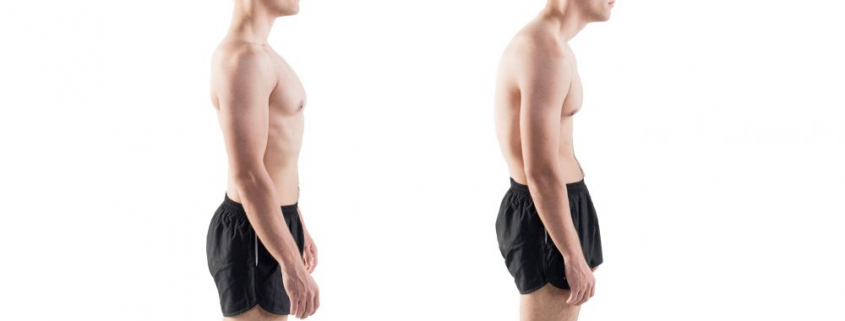
A curved back (or hyperkyphosis) is an excessive accentuation of kyphosis, the physiological curve of the thoracic spine. It is located in the upper part of the spine and may cause pain in adulthood.
In more severe forms, in addition to aesthetic concerns, it can lead to anterior compression of the vertebrae and respiratory impairment.
In some cases, the condition is located at the junction between the lumbar and thoracic segments of the spine; in this case, it is referred to as thoraco-lumbar kyphosis. Unlike scoliosis, hyperkyphosis more frequently leads to spinal pain in adulthood, particularly in thoraco-lumbar forms.
Recognition and progression
Like scoliosis, a curved back presents with specific signs that must be carefully assessed by a specialist physician in order to make an accurate diagnosis.
To distinguish a true curved back (a structural condition) from a kyphotic posture (a postural defect), it is sufficient to ask the patient to perform spinal extension (straightening the spine upwards). If the thoracic spine is rigid and the kyphosis does not fully correct, a true curved back is present. If the spine straightens completely, the condition is a kyphotic posture, i.e. a postural defect only.
Also like scoliosis, a curved back is often referred to as an “adolescent condition” because it tends to worsen mainly during growth, particularly during the pubertal growth spurt (ages 10–13 in females and 12–15 in males), and progresses until the end of skeletal maturity (approximately 1–2 years after the end of height growth).
In 8 out of 10 cases, curved back affects males.